Sales Chaos is Expensive
Sales chaos is expensive. Not just financially. Operationally. Emotionally. Strategically. You see it when: ❌…




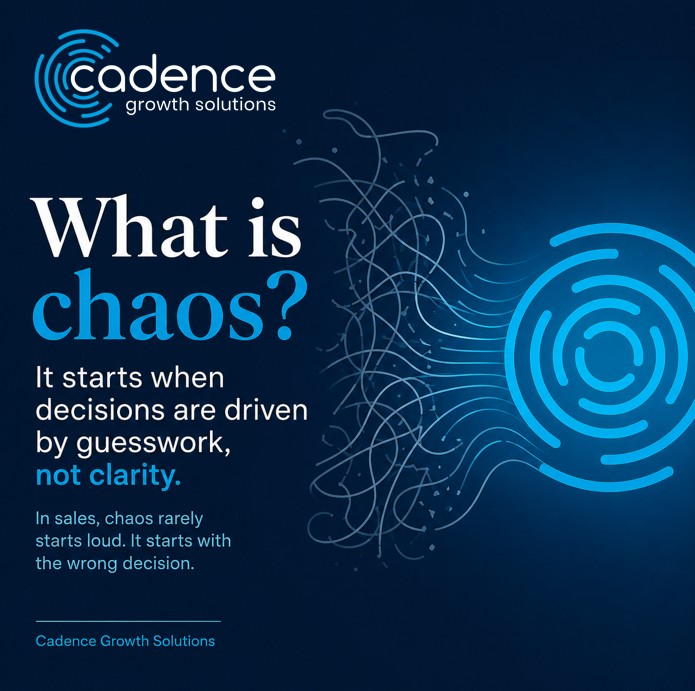
This week I was asked a question that stopped me in my tracks:
What is chaos?
It made me pause because my instinct was not to define what chaos looks like, but to think about where it starts.
For me, chaos usually starts with a decision made on guesswork, instinct or pressure rather than evidence, clarity and understanding.
This is especially true in sales.
For example:
😬 Deciding you need more leads, when the real constraint is poor follow-up or weak conversion.
😮 Trying to grow by increasing prices, while ignoring customer lifetime value.
😒 Pushing harder for sales activity, when the actual issue is unclear positioning or a weak proposition.
At the point the decision is made, it may not feel like chaos.
In fact, it can feel like action.
But over time, the cracks begin to show.
Targets get missed. Pressure builds. Urgency increases. More activity is demanded. More noise enters the system.
And because the original direction was not based on clarity, the response is often to do more of the very thing that is driving the issue in the first place.
For me, that is chaos.
❌ Not just things being busy.
❌ Not just people working hard.
❌ Not just a lack of effort.
Chaos is when a business is moving quickly, but not clearly.
It is when energy is high, but direction is uncertain.
It is when decisions are being made, but no one is fully sure whether they are solving the right problem.
That is why commercial clarity matters.
Because before you accelerate, you need to know what is really holding growth back.
So, I’ll ask the same question I was asked:
How would you define chaos?
I work with founder-led and SME B2B businesses that deliver complex, high-value work — often in regulated, technical, or risk-aware environments — and want sales to become predictable, disciplined,…
Post articles and opinions on Belfast Professionals
to attract new clients and referrals. Feature in newsletters.
Join for free today and upload your articles for new contacts to read and enquire further.