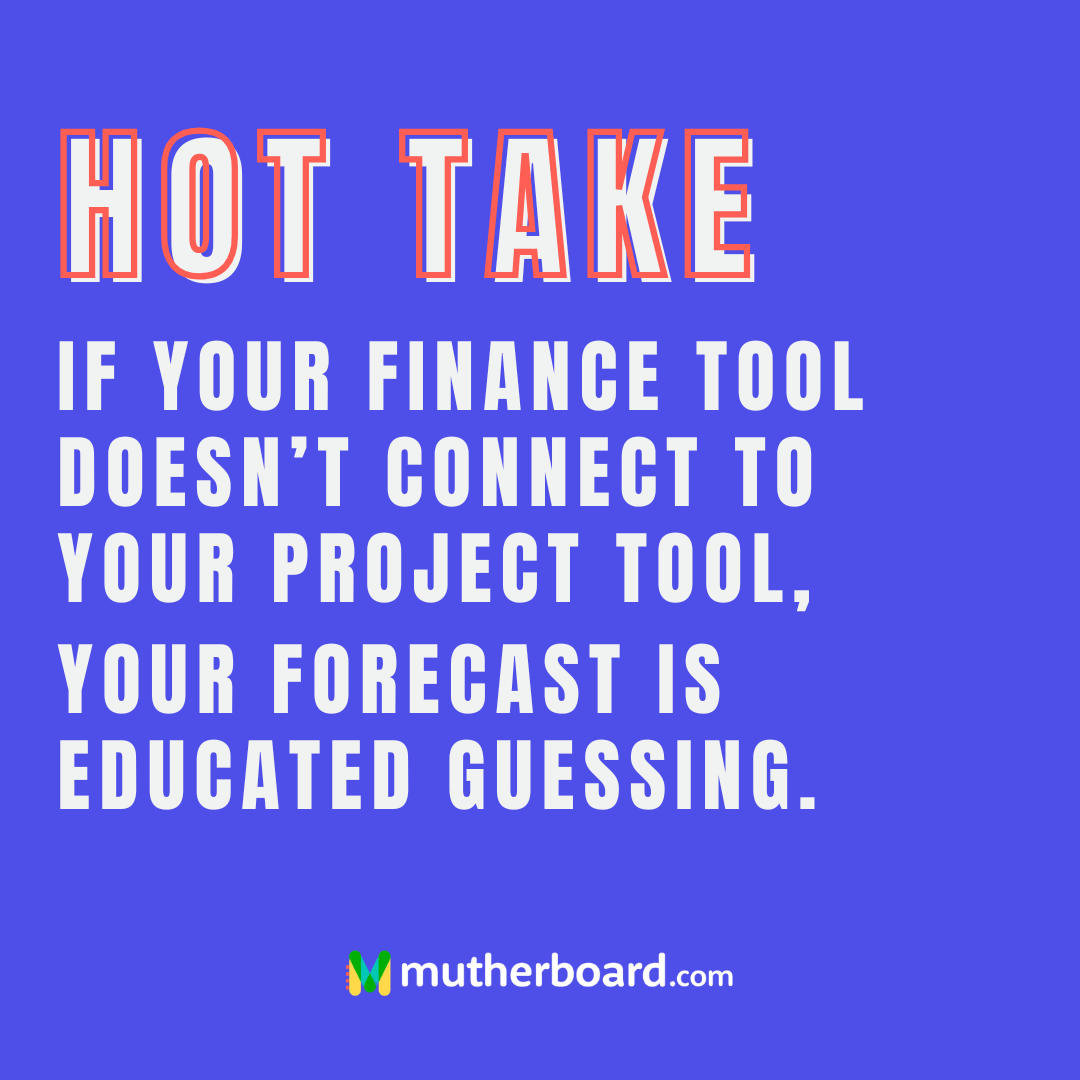
It sounds dramatic. It’s not.
Most businesses think they’re forecasting.
In reality, they’re stitching together spreadsheets, exporting CSVs, chasing department heads on Slack, and hoping the numbers reconcile by the time the board deck is due.
And the scary part?
Everyone knows it’s slightly off. They just don’t know how off.
The Illusion of Control
Here’s what usually happens:
-
Finance builds budgets and revenue projections in their system.
-
Project teams track delivery, timelines, and scope in another platform.
-
Resource managers are juggling capacity in yet another tool (or worse… a spreadsheet).
-
Leadership expects a clean, confident forecast.
But none of these systems are properly connected.
So what fills the gaps?
Assumptions.
Assumptions about:
-
How long projects will actually take
-
Whether teams truly have capacity
-
If scope creep is affecting margins
-
Whether revenue will land in the month it was predicted
When your systems don’t talk, your forecast becomes a story you’re telling yourself.
A polished one. But still a story.
Where It Breaks (Quietly)
Disconnected systems create subtle but expensive problems:
1. Revenue Timing Drift
Sales marks a deal as closed. Finance forecasts revenue for next month.
Delivery knows the onboarding will realistically take six weeks.
But that insight doesn’t flow automatically.
So revenue gets forecasted based on optimism, not operational reality.
2. Margin Blindness
If project burn (time and cost) isn’t syncing back to financial data in real time, you only find out you’ve blown the margin… after it’s too late.
By then, it’s a post-mortem.
3. Capacity Guesswork
Resource managers are often working off static views of who’s “allocated.”
But are those hours accurate?
Has scope changed?
Is someone juggling three priority projects?
Without live integration, capacity planning becomes calendar Tetris.
4. Leadership Decisions on Lagging Data
Board reports look neat.
Dashboards look impressive.
But if the numbers are manually compiled, they’re already outdated the moment they’re presented.
That’s not real visibility. That’s curated hindsight.
Why This Happens (And Why It’s So Common)
No one sets out to build chaos.
It usually starts small:
-
“We’ll just export this monthly.”
-
“We can manually update the revenue column.”
-
“Finance can reconcile that at quarter-end.”
Then the company grows.
More projects.
More clients.
More complexity.
And suddenly the duct tape holding your systems together becomes a full-time job.
The problem isn’t the tools themselves. Many finance and project platforms are powerful on their own.
The problem is the gap between them.
What Happens When You Connect Them
When finance, project management, and resource planning are integrated properly, something shifts.
You move from reporting the past… to seeing the present.
Now you can:
-
See real-time project burn against budget
-
Forecast revenue based on actual delivery timelines
-
Understand margin by project, team, or client
-
Model capacity before committing to new work
-
Identify risks early instead of explaining them later
Finance stops operating in isolation.
Operations stops guessing about budgets.
Leadership stops making decisions based on stitched-together snapshots.
It’s not just cleaner reporting.
It’s smarter decisions.
Forecasting Shouldn’t Feel Like Gambling
If your current process relies on:
You don’t have a forecasting system.
You have educated guessing.
And educated guessing works — until it doesn’t.
Until margins slip.
Until cash flow tightens unexpectedly.
Until a project overruns and nobody saw it coming.
The Real Shift: Visibility Over Optimism
Connecting your systems isn’t about tech for tech’s sake.
It’s about:
-
Reducing friction between teams
-
Removing manual admin
-
Creating one version of the truth
-
And replacing optimism with evidence
When your tools talk to each other, forecasting becomes grounded in reality.
Not hope.
Not habit.
Not historical averages.
Reality.
If you’re feeling the friction between finance and delivery, that’s usually a signal — not a failure.
The good news? It’s fixable.
And once your systems are connected, you don’t just forecast better.
You lead better.